
St Edmund's
St Edmund’s Remembers Three Lives Lost in the First World War
Social responsibility is one of our five core values at St Edmund’s. It reflects our origins in the mid-eighteenth century as a school for orphans and is central to our ethos today. When pupils leave our school, I want them to be ready to make a meaningful and constructive contribution to society. It is our responsibility as educators to inculcate and nurture that mindset. At St Edmund’s, we seek to achieve that in a number of ways.
Every November, we come together to remember those who gave their lives in war.
The wearing of poppies, the sound of the Last Post and the two-minute silence are familiar traditions, but behind each act of remembrance are the stories of real people.
For St Edmund’s School, remembrance is particularly personal. The names of former pupils who lost their lives in conflict form an important part of our history, connecting today’s school community with generations who walked the same corridors and shared the same sense of belonging.
Ninety-three former pupils of the school lost their lives in the two world wars. Every October half-term, I spend time researching some of the names to try and understand their background and experience.
Today in Head’s Line, I talked about three young men whose stories reveal different aspects of the First World War: the dangers of the Western Front, the devastating cost of major offensives and even the risks faced by the pioneers of military aviation.
Wakefield Waldo Meade: A Young Officer Lost in Belgium
Wakefield Waldo Meade was just 19 years old when he died on 20 June 1915, serving as a Second Lieutenant in the Worcestershire Regiment.
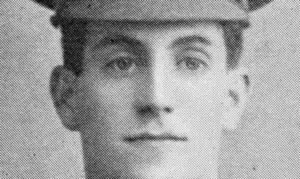
The son of Wakefield and Hannah Meade, his family lived at Kingscliffe, Hale Lane, Mill Hill, Middlesex.
Meade served during the early years of the First World War, when British forces were engaged in fierce fighting on the Western Front. By the summer of 1915, the conflict had developed into a devastating struggle of trenches, artillery bombardments, and costly attacks.
Meade died in Belgium on 20 June 1915 during the second battle of Ypres.
He died near the village of Hooge just east of Ypres.
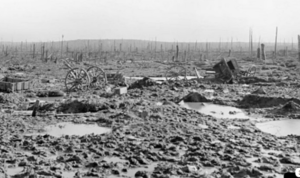
Evidence from the Dover War Memorial project, suggests that Meade was mortally wounded by a German sniper. Tragically, three of his men were also then killed trying to rescue him.
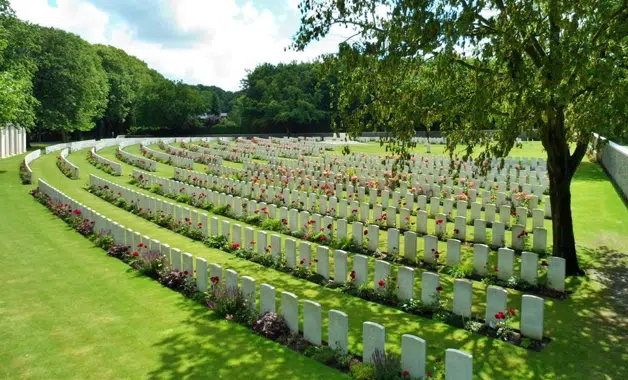
He is buried at Sanctuary Wood Cemetery in Belgium (below), a lasting reminder of the many young servicemen who never returned from the battlefields of Flanders.
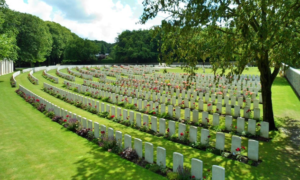
At only nineteen, Meade was barely older than some of today’s senior pupils.
F. C. D. Williams: The Tragedy of Fromelles
The story of Second Lieutenant F. C. D. Williams takes us to one of the costliest engagements of 1916: the Battle of Fromelles.
On 19 July 1916, British and Australian forces launched an attack against German positions near the village of Fromelles in northern France.
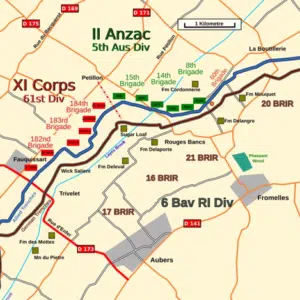
The offensive took place during the wider Somme campaign and was intended to put pressure on German forces. Instead, the attacking troops encountered formidable defences and suffered devastating casualties.
Williams served with the 2/4th Battalion of the Royal Berkshire Regiment, part of the British forces involved in the operation. This battalion was part of the 184th Brigade (see map above).
The battalion’s war diary provides a stark record of the events of that day.
Artillery preparation began at 11am, with the attack commencing on the heavily fortified Sugar Loaf Salient (below) at 6pm.
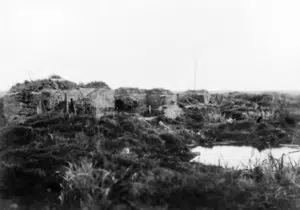
The battalion was operating alongside other British formations, with Australian troops positioned further to the left.
The diary records three officers killed: Lieutenant Colonel J. H. Beer, Second Lieutenant G. S. Abbott, and Second Lieutenant F. C. D. Williams.
It also records thirty-five other ranks killed, 115 wounded and eight suffering from shell shock.
In all 5,500 allied troops were killed or wounded in the engagement.
These figures reveal the terrible human cost of a single day’s fighting.
A letter from a Captain Palmer to Williams’ family states that Williams had spent the day encouraging and reassuring his men and that his final words before he was killed were “shall I go out now sir?.”
For Williams, 19 July 1916 was his final day.
His death was one among many during an operation that became remembered for its extraordinary losses.
Mendel Francis Thwaite: A Life Lost in the Skies
The story of Mendel Francis Thwaite highlights a different danger of the First World War: the rapid development of military aviation.
Thwaite was born into a family associated with March in Cambridgeshire. Commonwealth War Graves information identifies him as the son of Samuel T. and Katie Marion Hertzberg.
His family changed their name to Thwaite during the war as their original name sounded German.
In August 1917, he was appointed to the Royal Naval Air Service, joining a new generation of young men training to fly military aircraft.
The Royal Air Force was established in April 1918, bringing together the Royal Flying Corps and the Royal Naval Air Service. Thwaite subsequently served as a Second Lieutenant in the RAF.
Aviation was still in its infancy. Aircraft were fragile, flying conditions could be unpredictable and training itself carried considerable risks.
By October 1918, Thwaite was training at No. 58 Training Depot Station at Cranwell in Lincolnshire.
On 28 October 1918, he was flying an F.E.2b aircraft, serial number D9152 when tragedy struck.
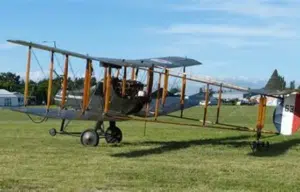
The aircraft stalled and entered a spin, crashing to the ground at Cranwell. Thwaite was killed, aged just nineteen.
His death came only two weeks before the Armistice of 11 November 1918 brought the fighting on the Western Front to an end.
He is buried in St Andrew’s Churchyard at Cranwell.
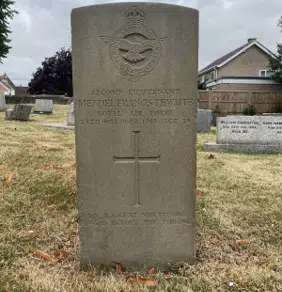
Thwaite’s story reminds us that the dangers of war were not confined to the trenches. Young men also lost their lives during training and preparation for military service.
He never had the opportunity to see the peace that followed the Armistice.
Although their experiences were different, Meade, Williams and Thwaite shared a connection to St Edmund’s and a place in the history of the First World War.
Their stories reveal the many forms that wartime sacrifice could take.
These were not simply names in military records. They were young people with families, hopes and opportunities that were taken from them.
At St Edmund’s, we remember them with gratitude, respect, and a commitment to ensuring that their stories continue to be told.