

St Edmund's
The Power of Being Known
Unexpectedly the other day, I found myself talking with someone about Winnie-the-Pooh. To be honest, this is not a subject on which I am confident.
In truth, I am far more comfortable discussing the Russian Revolution or Bismarck. However, I was fishing for ideas for my Speech Day address it was an interesting conversation.
My colleague was making the point that, like a good school, the Hundred Acre Wood is a place where every character is accepted with their peculiarities intact. Eeyore is downbeat, Tigger is exuberant and Piglet is timid, yet each still belongs. Their friendships suggest that being known does not require perfection; it requires recognition and welcome.
They felt that was “very St Edmund’s” and I thought they had a point.
Educational research consistently highlights the importance of strong relationships in children’s learning and development. For example, in Visible Learning (2009) John Hattie identifies positive teacher-student relationships as a significant influence on achievement, while attachment theory (Bowlby and Ainsworth) and subsequent school-based research by Pianta and others suggest that children learn best when they feel safe, understood and connected to the adults around them.
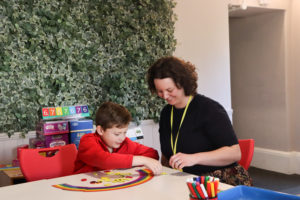
Every child benefits from being recognised and valued for who they are.
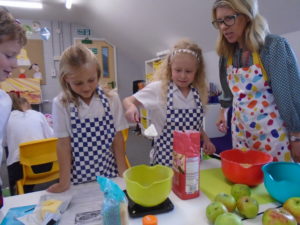
I spent a year as Acting Head of St Edmund’s Junior School. I loved the unpredictability of each day and every conversation. One moment I was losing an argument about dinosaurs with a six-year-old who (I discovered the hard way) was a genuine expert; the next, I was being dressed up in an apron to help out with a cookery lessons or admiring an unusual playground invention made entirely from sticks, mud and imagination. I learned that children have a remarkable way of revealing who they are when we take the time to notice.
When parents choose a school, they quite rightly consider many factors. They look at academic outcomes, facilities and opportunities beyond the classroom. Yet one of the most important questions may be the simplest: Will my child be known here? To thrive, children (just like us adults as it happens) need to feel seen and valued as individuals.
Being known is not simply about teachers (and Headteachers) remembering names. It means understanding who loves to ask questions in History (and who prefers to listen and reflect), who is happiest shaping clay in Ceramics, who needs encouragement to join in with a Drama class and who is patiently waiting for their chance to shine in the middle of our school orchestra. It means celebrating the child who has mastered a tricky piece of Maths or French just as warmly as the one who has found the courage to speak in assembly.
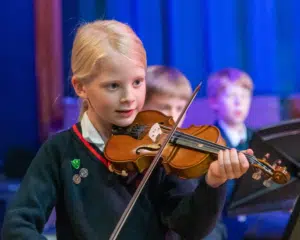
One of the other privileges of working in a junior school is watching each personality emerge. When children feel known, something special happens. They grow more confident in trying new things, more willing to ask questions, make mistakes and persevere through challenges.
Often, it is the smallest moments that have the greatest impact: a teacher asking about a weekend football match, a member of staff remembering a child’s favourite book series, or having a quiet word of encouragement before a performance. These gestures may seem minor, but they send a powerful message: You matter. We notice you.. In 1983, my sports teacher at school saw me charging madly around a football pitch and told me that I could be a good 400m runner. Two years later, he was my coach and I was running for my county – something that still gives me a sense of pride today in my fifties.
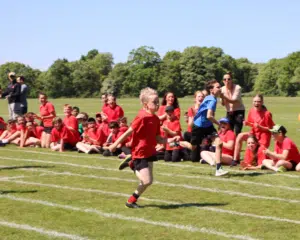
Children change enormously during their junior school years, and that growth is best supported by adults who understand their strengths, quirks, worries and aspirations.
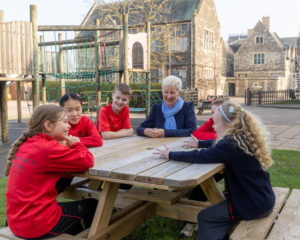
Years from now, children will not remember every spelling test or maths lesson. However, they will remember the people who believed in them, understood them and helped them recognise their potential.
If I may quote Winnie-the Pooh, “A little consideration, a little thought for others, makes all the difference”.
EOC